
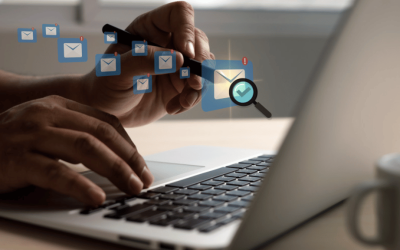

Email feels simple on the surface. Messages arrive. Replies are sent. Conversations move forward. However, behind every inbox sits a growing volume of data. Contracts, approvals, invoices, legal notices, and internal discussions all live inside email threads. Over time, that data becomes critical. If it disappears, the impact can be serious. If you’ve ever wondered why businesses treat email as more than casual communication, let us explain. Email archiving protects valuable records. It ensures messages remain searchable, secure, and accessible when needed most.
What Is Email Archiving?
Email archiving is storing emails outside of email accounts in the form of electronic files for future analysis and review. The key point about archiving is transferring a copy of the email in a safe and compliant system.
These email messages maintain their initial form. Hence, their content, attachments, date stamps, and metadata will stay the same. This is vital for authenticity during audits and legal inquiries.
Email archiving does not add any emails to users’ inboxes. Rather, it creates a collection of structured records.
Why Email Archiving Is Important?
Communication via email is essential in business activities. Often, important agreements exist solely as emails. Hence, loss of this information leads to certain risks.
Email archiving helps reduce the risk. Indeed, it keeps copies of emails for the future despite any deletion attempts made by users.
Also, there are industry-specific regulations requiring retaining communication for certain periods. In these cases, archiving becomes necessary to meet compliance needs.
Despite the possible concerns about storage management, archiving makes the process easier.
How Email Archiving Works?
First, all emails that come in and go out are captured. This process takes place automatically and either in real time or periodically.
Secondly, all emails become indexed. This means that users can find the required email based on content, keywords, timestamp, sender, etc.
After that, emails stay immutable. This way, users cannot make any changes to their copies.
Finally, when needed, users get a chance to find an email. Instead of looking at thousands of emails in inboxes, authorised persons will be able to search and find their emails fast.
The Difference Between Backup and Archiving
Confusion between archiving and backing up emails is common. Still, these actions are different from each other.
While backing up creates additional copies of the entire system for restoring the operation of services if something goes wrong, archiving keeps copies of emails only.
Hence, backing up involves copying data to be able to restore service. Meanwhile, archiving implies keeping emails as records and searching through them if needed.
Why Email Archiving Is Essential for Businesses?
Email archiving contributes to better storage management. Indeed, once stored away, old emails will stop filling mail servers.
Secondly, archiving provides enhanced security. Emails in the archive will be encrypted. This way, their content will be protected.
At the same time, quick searches are also among the benefits as this feature increases productivity.
Moreover, email archiving helps deal with compliance as it provides structured archiving.
Compliance and Risk Mitigation Support
There are regulations requiring business entities to retain communication. Email archiving allows for meeting this requirement.
Since archived emails remain unmodified, these emails become evidence when it is needed to present proof.
What is more, email archiving supports role-based access. Thus, users will have permission to access sensitive emails only.
Conclusion
Email archiving is not only about freeing storage space but also about keeping business communication safe. Moreover, it allows for meeting compliance requirements. Since it includes capturing emails, indexing and keeping them in a safe place, email archiving offers businesses great control over their communication.
At The Node IT, you will find professional solutions for your business. We will design and implement reliable archiving systems for you.
Reach out to us and get a consultation.